Why is there an oil film on my windshield?
Last week I drove in the rain and suddenly I could barely see the road. A weird rainbow-colored film covered my entire windshield. It scared me.
An oil film on your windshield is a thin layer of grease, road grime, and exhaust residue that sticks to the glass. It often looks shiny or rainbow-like and gets worse in rain or at night.

You’re not alone if this drives you crazy. I hated it too. Keep reading and I’ll show you exactly why it happens and how to fix it for good.
Why does my windscreen look oily?
One morning I walked to my car and saw a strange sheen all over the glass. It looked like someone sprayed cooking oil on it. I felt confused and annoyed.
The oily look comes from a mix of tiny oil droplets, wax, and dirt that build up over time. Car exhaust, road tar, and even your wipers spread it around.
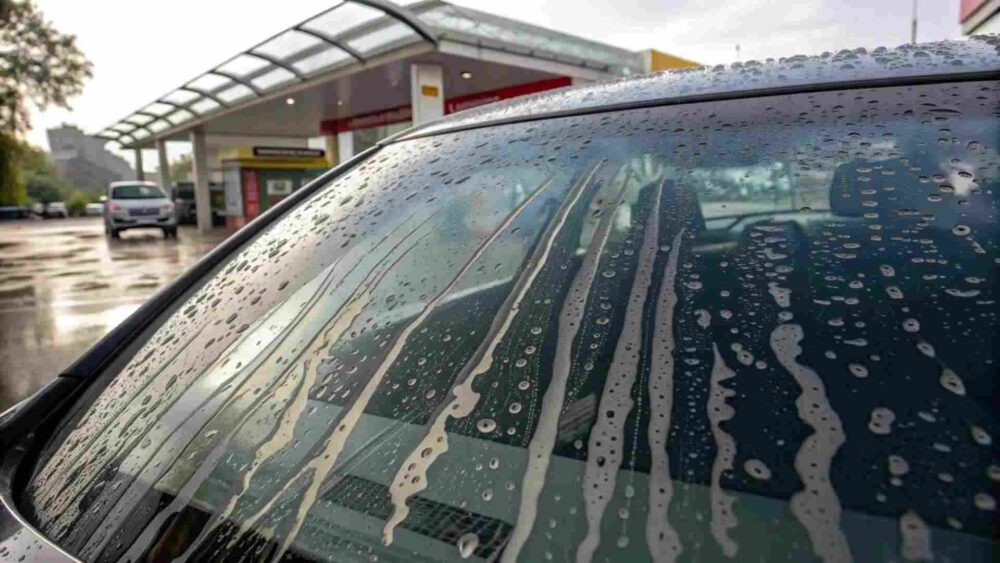
Most people think it’s just dirt. But it’s different. Normal dirt washes off with water. This film laughs at regular washer fluid. I learned that the hard way after many failed attempts.
What causes oil film on windshield?
I used to blame birds or tree sap. Then I noticed the film came back every few weeks no matter how much I cleaned. Something else was going on.
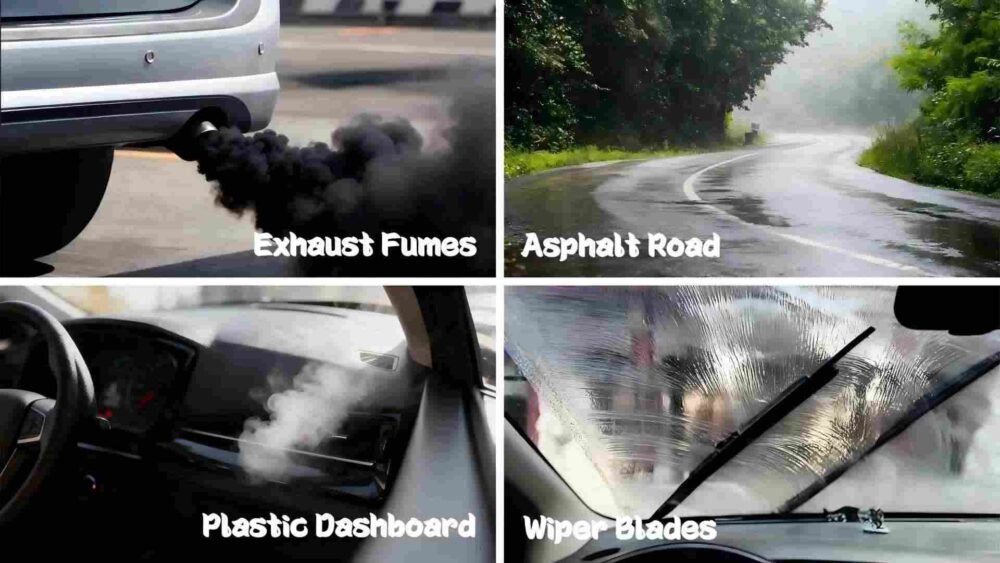
The main causes are exhaust fumes, asphalt road oil, off-gassing from plastic interior parts, and old wiper blades that leave streaks. Rain and sun make everything stick harder.
Where the oil really comes from – let’s break it down
I made a simple table after I researched this for months. Here are the top culprits I found in my own driving:
| Source | How it gets on the glass | How bad (1-10) | Happens more when |
|---|---|---|---|
| Diesel truck exhaust | Tiny oil particles float and land on the windshield | 9 | Heavy traffic, highways |
| Fresh asphalt roads | Tar mist flies up from tires | 8 | Summer, new road work |
| Plastic dashboard | Heat makes plastic release gases that condense | 7 | Hot parked car, direct sun |
| Old or cheap wiper blades | Rubber breaks down and leaves oily residue | 6 | After 6-12 months of use |
| Car wash wax | Some waxes contain silicone that smears | 5 | Drive-through car washes |
| Bug guts + heat | Proteins mix with road oil | 4 | Night driving in summer |
I drive a lot on highways. Diesel trucks pass me all day. That explained most of my problem. When I changed my route to smaller roads, the film grew much slower.
Another surprise came from my own dashboard. I parked in the sun one summer. The inside plastics got hot and released invisible vapors. Those vapors hit the cold windshield at night and turned into an oily layer. I proved it by covering half the dash with a towel – that half stayed cleaner longer.
Old wipers are sneaky too. I replaced mine every year. My friend kept his for three years. His windshield looked like an oil slick all the time. New blades fixed it in one week.
The rain paradox
Here’s something strange I noticed. Rain should clean the glass, right? Wrong. When rain hits a light oil film, it spreads the oil into that rainbow pattern. The water can’t wash it away because oil and water don’t mix. So after every storm, my windshield looked worse, not better.
That’s when I knew I needed a real solution, not just more washer fluid.
For the fastest and safest way to get rid of it permanently, check this professional oil film remover.
How to remove greasy film from glass?
I tried vinegar, newspaper, baking soda, and dish soap. Some worked a little. Most made the problem worse or scratched the glass. I almost gave up.
The only method that completely removes the greasy film every single time is the proper four-step process using a dedicated oil film remover and a white cleaning sponge.
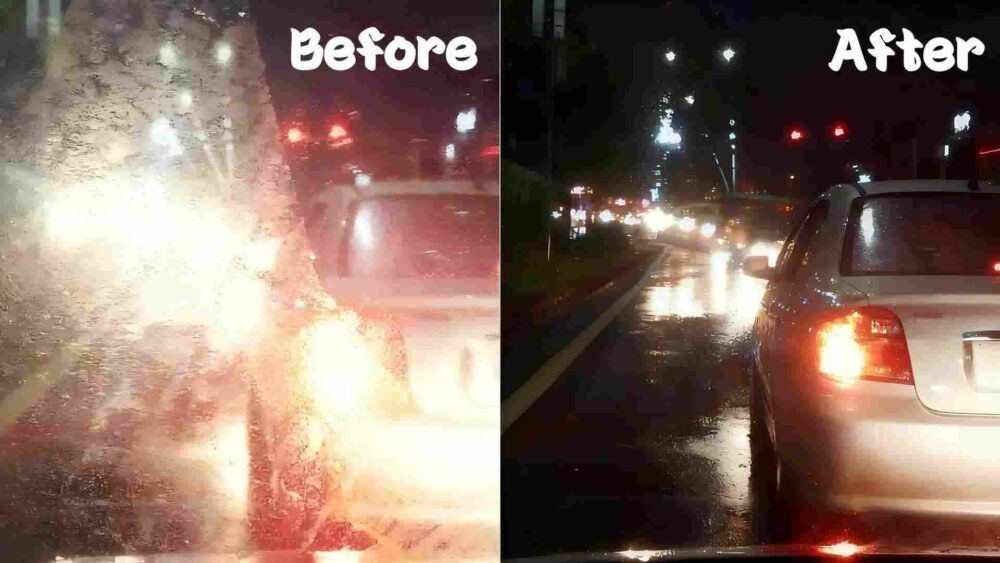
The exact 4-step method I now use every time
This is the process that finally worked perfectly for me. I do it twice a year and my windshield stays crystal clear even at night.
What you need
- Water hose or bucket
- Dedicated oil film remover spray
- Clean white scrubbing sponge (the white ones that come with the product work best)
- Microfiber towel for final wipe
Step-by-step (never skip any step)
| Step | What I do | Time | Why it matters |
|---|---|---|---|
| 1 | Rinse the entire windshield with plenty of clean water | 2 min | Removes loose dirt and dust so you don’t scratch |
| 2 | Spray the oil film remover generously all over the glass (don’t be stingy) | 1 min | More product = better and faster removal |
| 3 | Use the white sponge and rub back and forth firmly but evenly | 10-15 min | This is where the magic happens – the film lifts off |
| 4 | Rinse thoroughly with water again until no residue is left | 3 min | Leaves glass perfectly clean and streak-free |
I made the mistake of using too little product the first time. The film only came off in patches. The second time I sprayed until the glass was completely soaked. I rubbed with the white sponge in straight lines, top to bottom, then side to side. Everything came off in one go.
The white sponge is important. I tried a yellow kitchen sponge once and it left tiny scratches. The special white ones are gentle on glass but tough on oil film.
Extra tips I learned from doing it wrong first
- Do it in the shade or on a cloudy day. Direct sun dries the product too fast.
- Work on one section at a time if your windshield is big.
- If the film is very thick (like mine was after a summer of highway driving), do step 2 and 3 twice.
- After the final rinse, I wipe with a microfiber towel so no water spots stay.
Prevention habits that saved me
Now that I know how to remove it perfectly, I also prevent it:
- I replace wipers every 6-12 months
- I avoid cheap car wash wax
- I crack windows when parked in hot sun
- I keep a bottle of oil film remover in the trunk for quick maintenance
Conclusion
That annoying oil film comes from exhaust, road tar, and dashboard gases. Use the 4-step water-spray-rub-rinse method with real oil film remover and your windshield stays perfectly clear.
Drive safe and enjoy the view!