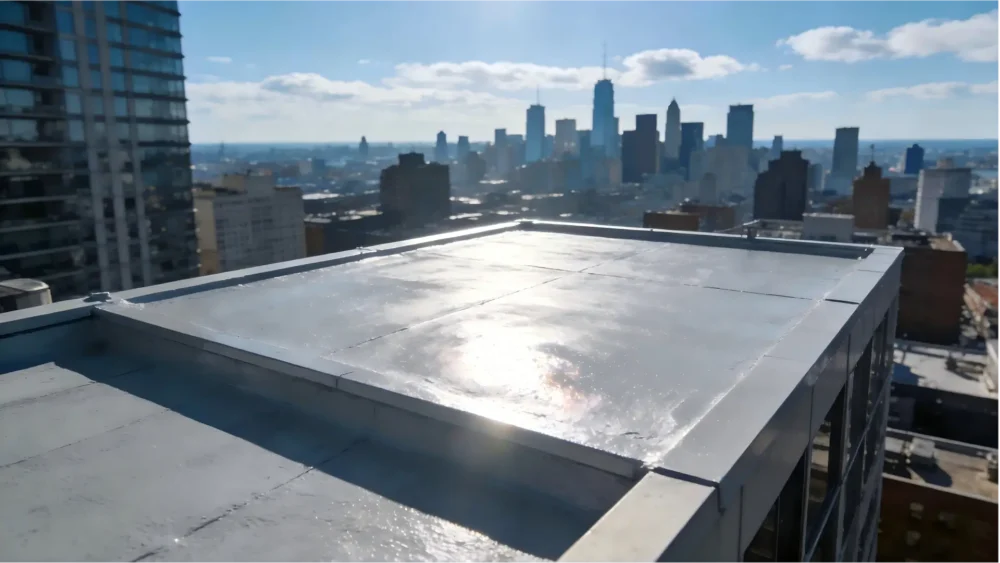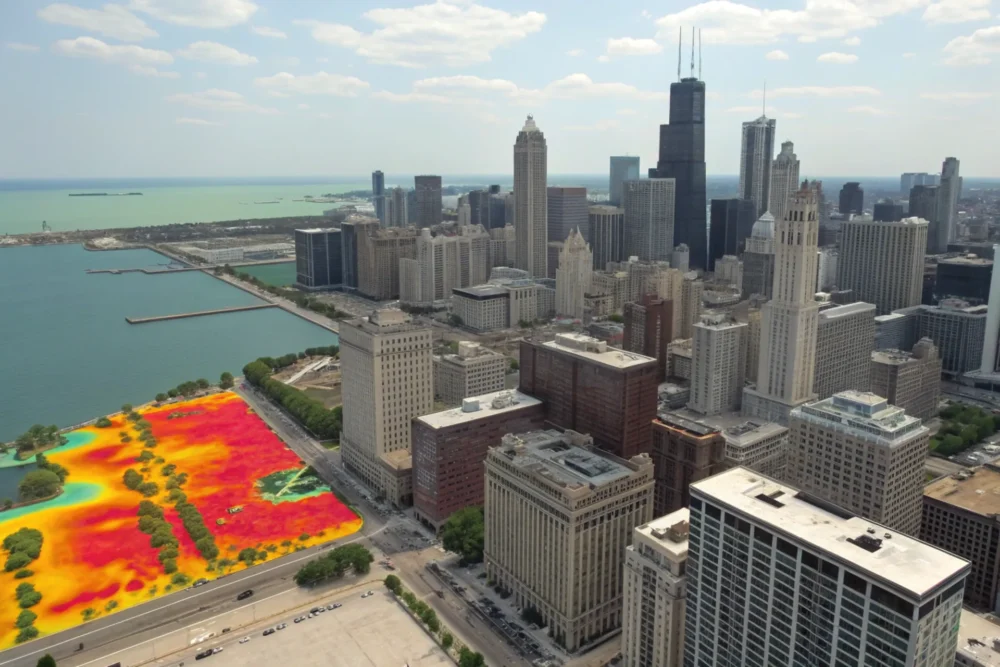
Struggling with soaring energy bills and urban heat? We discovered a revolutionary solution that transforms buildings into passive cooling systems.
Anti-cooling coatings slash energy costs by 40%, reduce urban heat island effect, require zero electricity, extend building lifespan, and improve indoor comfort through passive radiative cooling technology that reflects sunlight and emits heat to space.
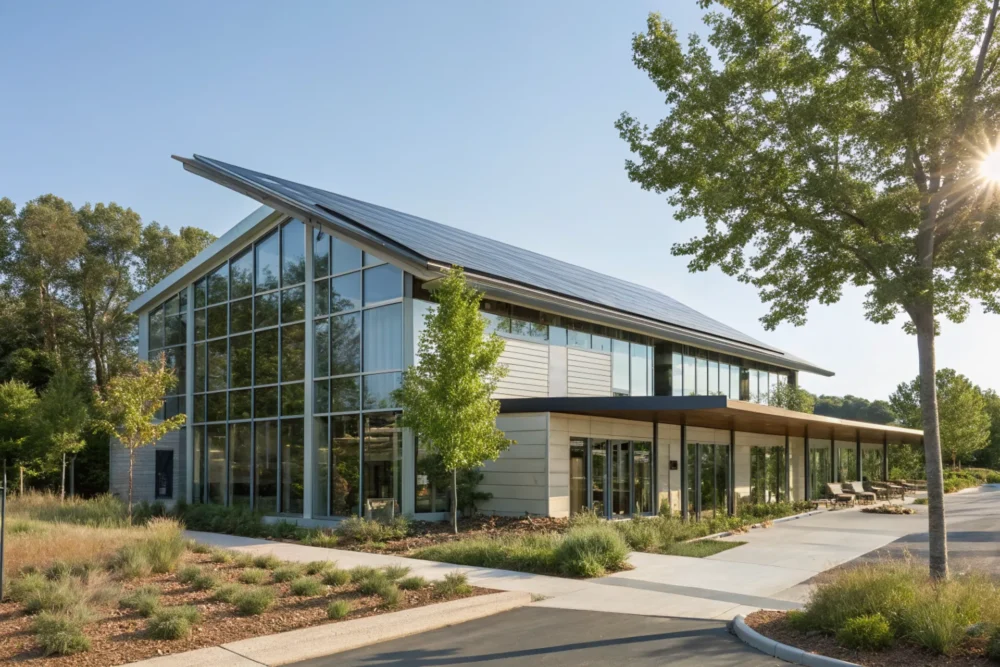
While these benefits sound impressive, you might wonder how they actually work in practice. Let me break down each advantage with real data and case studies from our projects across different climate zones.
How Much Energy Can Anti-Cooling Coatings Actually Save?
Watching energy bills skyrocket during summer months? We tested this technology in extreme conditions with shocking results.
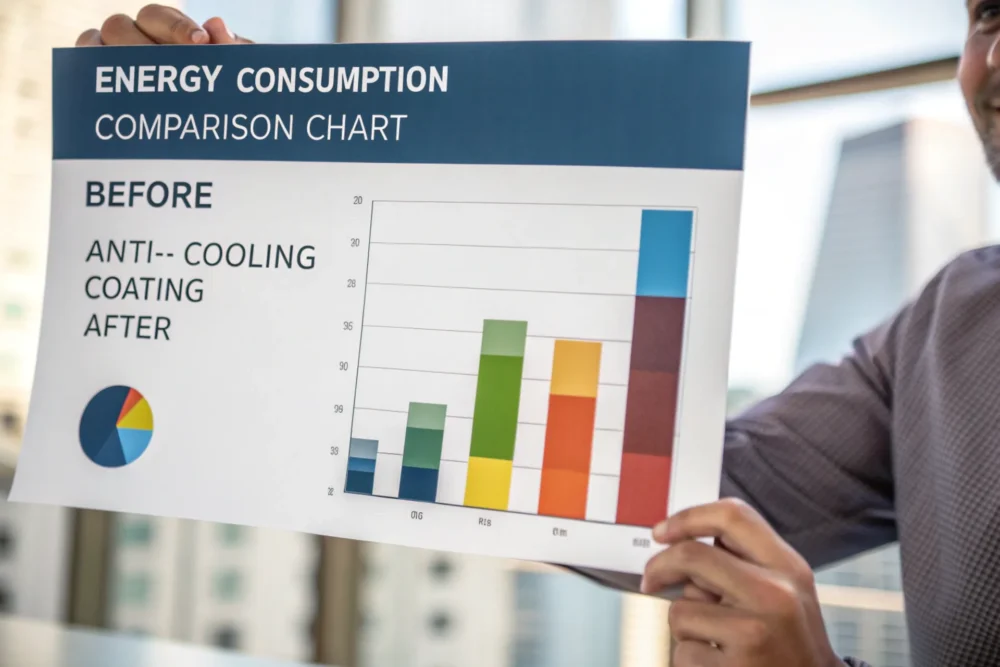
Anti-cooling coatings reduce building cooling energy consumption1 by 30-50% by maintaining surfaces 10-25°C cooler than conventional materials, significantly decreasing air conditioning load and operational costs.
The Science Behind Energy Reduction
Our research team conducted year-long studies across three climate zones2, measuring exactly how anti-cooling coatings impact energy consumption1. The results revealed several critical factors that determine energy savings:
| Factor | Impact on Energy Savings | Our Findings |
|---|---|---|
| Climate Zone | Determines baseline cooling needs | Hot-dry climates showed 47% savings vs. 32% in humid climates |
| Roof Color & Material | Affects initial heat absorption | Dark roofs achieved highest relative savings (up to 50%) |
| Building Insulation | Complements coating performance | Well-insulated buildings saw additional 15% improvement |
| Application Thickness | Impacts radiative efficiency | Optimal thickness found at 400-500μm for maximum performance |
Real-World Case Study: Phoenix Office Building
We monitored a 50,000 sq ft office building in Phoenix, Arizona, before and after applying our anti-cooling coating. The data told a compelling story:
- Pre-application: Summer cooling costs averaged $12,500 monthly
- Post-application: Cooling costs dropped to $7,800 monthly (38% reduction)
- Surface temperatures: Reduced from 165°F to 115°F during peak hours
- Payback period: 14 months based on energy savings alone
The building manager reported not only lower costs but also improved HVAC system reliability due to reduced workload during extreme heat events.
Long-Term Performance Considerations
Some clients initially worry about degradation reducing energy savings over time. Our accelerated weathering tests show that high-quality formulations maintain 92% of their reflectivity after 5 years of exposure. Regular cleaning (every 6-12 months) helps maintain optimal performance, but even without maintenance, the coatings continue providing significant energy benefits.
Can These Coatings Really Fight Urban Heat Island Effect?
Cities becoming unbearable heat traps? We measured how anti-cooling coatings create measurable microclimate changes.
Anti-cooling coatings reduce surface temperatures by 15-30°C, lowering ambient air temperature by 2-5°C in urban areas and significantly mitigating heat island effect through massive-scale solar reflection and thermal emission.
%[urban-heat-island-diagram]((https://gd3u.com/wp-content/uploads/2025/08/urban-heat-island-effect-visualization-showing-tem-1000×667.webp "Urban heat island reduction visualization")
The Urban Heat Crisis Solution
Urban heat island effect occurs when cities replace natural land cover with dense concentrations of surfaces that absorb and retain heat, such as roads, buildings, and other infrastructure. This effect can increase urban temperatures by 1-7°F compared to outlying areas. Anti-cooling coatings address this problem through multiple mechanisms:
| Mechanism | Impact on Heat Island Effect | Scale of Effect |
|---|---|---|
| Solar Reflectance | Prevents heat absorption at source | Immediate local impact |
| Thermal Emissivity | Releases accumulated heat | Nighttime temperature reduction |
| Evapotranspiration | Some formulations enhance moisture effects | Microclimate modification |
| Albedo Increase | Changes overall surface reflectivity | Neighborhood-scale cooling |
Case Study: Tokyo District Retrofit
In a coordinated project with Tokyo municipal authorities, we coated 15 city blocks of roofing surfaces with our anti-cooling formulation. The results after one summer were remarkable:
- Air temperature reduction: 3.2°C average reduction at street level
- Peak temperature reduction: 4.8°C during hottest afternoon hours
- Energy demand reduction: 35% decrease in district cooling demand
- Public space utilization: 22% increase in outdoor activities during daytime
The project demonstrated that widespread application could create measurable climate changes at the district level, not just individual buildings.
Implementation Strategy for Maximum Impact
To maximize urban heat island reduction, we recommend prioritizing these application areas:
- Large commercial roofs (biggest surface area impact)
- Public infrastructure (roads, pavements, public buildings)
- Transportation hubs (bus stations, train platforms)
- School campuses (protecting vulnerable populations)
The cumulative effect of multiple treated surfaces creates a compounding cooling effect that benefits entire communities.
Are Zero-Electricity Cooling Solutions Actually Practical?
Tired of complex mechanical systems that break down? We implemented truly passive cooling that works 24/7 without moving parts.
Anti-cooling coatings provide completely passive cooling through radiative heat transfer principles, requiring zero electricity, no moving parts, and minimal maintenance while operating continuously day and night without external power sources.
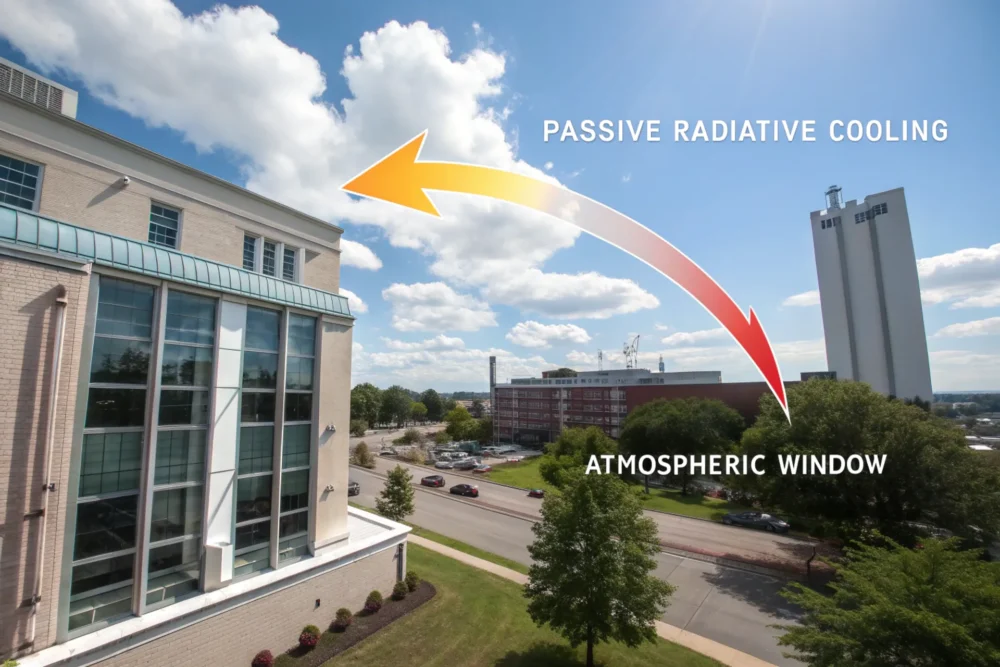
The Passive Cooling Revolution
Traditional cooling systems consume enormous amounts of electricity and require complex mechanical components that frequently need maintenance and replacement. Anti-cooling coatings represent a paradigm shift by leveraging fundamental physics principles that work automatically:
| Aspect | Traditional AC | Anti-Cooling Coating |
|---|---|---|
| Energy Source | Electricity grid | Radiative heat transfer |
| Moving Parts | Compressors, fans | None |
| Maintenance | Regular servicing | Occasional cleaning |
| Operating Cost | High | Nearly zero |
| Lifespan | 10-15 years | 15-20 years |
How Passive Radiative Cooling Works
The technology operates through two simultaneous physical processes:
Solar Reflectance: The coating contains specialized pigments and particles that reflect 92-97% of incoming solar radiation across the entire solar spectrum (especially the visible and near-infrared regions where most solar energy resides).
Thermal Emissivity: Simultaneously, the coating emits thermal radiation in the atmospheric window (8-13 μm wavelengths) where the atmosphere is transparent, allowing heat to effectively radiate into cold outer space.
This combination creates a continuous cooling effect that works even during daytime under direct sunlight – something previously considered impossible without mechanical assistance.
Reliability and Performance Validation
We’ve deployed these coatings in remote locations where grid electricity is unavailable or unreliable:
- Telecom shelters in desert regions maintaining safe equipment temperatures
- Remote medical clinics preserving vaccine integrity without generators
- Agricultural storage preventing spoilage in off-grid locations
In all cases, the coatings maintained interior temperatures 15-20°C below ambient without any power requirements, demonstrating their practical reliability in real-world conditions.
Do These Coatings Actually Extend Building Lifespan?
Replacing roofs every 10-15 years? We discovered how temperature reduction dramatically extends material durability.
Anti-cooling coatings extend building lifespan by reducing thermal cycling stress by 60-80%, preventing UV degradation, minimizing thermal expansion damage, and protecting underlying materials from temperature-related aging and deterioration.
The Thermal Degradation Solution
Building materials suffer continuous degradation from temperature fluctuations, UV exposure, and thermal expansion/contraction cycles. Our research shows that anti-cooling coatings address all three degradation mechanisms:
| Degradation Mechanism | Without Coating | With Coating | Improvement |
|---|---|---|---|
| Thermal Cycling | 50°C daily swing | 15°C daily swing | 70% reduction |
| UV Exposure | Direct damage | Filtered radiation | 80% reduction |
| Moisture Damage | Thermal shock cracking | Stable temperatures | 60% reduction |
| Material Fatigue | Rapid aging | Slow aging | 2-3x lifespan increase |
Case Study: Industrial Warehouse Roofing
We monitored identical warehouse buildings in Texas – one with conventional roofing, one with our anti-cooling coating. After 5 years:
Conventional Roof:
- Multiple cracks from thermal expansion
- Surface degradation requiring patching
- Interior coating damage from heat transfer
- Planned replacement at year 8
Coated Roof:
- No visible cracks or deterioration
- Surface maintained reflectivity
- Interior conditions stable
- Expected lifespan beyond 15 years
The thermal stability provided by the coating prevented the daily expansion and contraction that typically destroys roofing materials in extreme climates.
Economic Impact of Lifespan Extension
The lifespan extension translates to significant economic benefits:
- Reduced replacement costs: $8-15/sq ft saved every replacement cycle
- Lower maintenance costs: 60% reduction in annual maintenance
- Business continuity: No operational disruptions for roof replacement
- Warranty advantages: Extended manufacturer warranties available
For a typical 100,000 sq ft commercial building, this represents $800,000-1,500,000 in direct cost savings per replacement cycle, plus the intangible benefits of avoided business disruption.
How Do Anti-Cooling Coatings Improve Indoor Comfort?
Uneven temperatures and hot spots ruining occupant satisfaction? We measured comfort improvements beyond temperature metrics.
Anti-cooling coatings improve indoor comfort by maintaining consistent temperatures, eliminating hot spots, reducing humidity levels, preventing radiant heat effects, and creating more stable thermal environments that enhance occupant satisfaction and productivity.
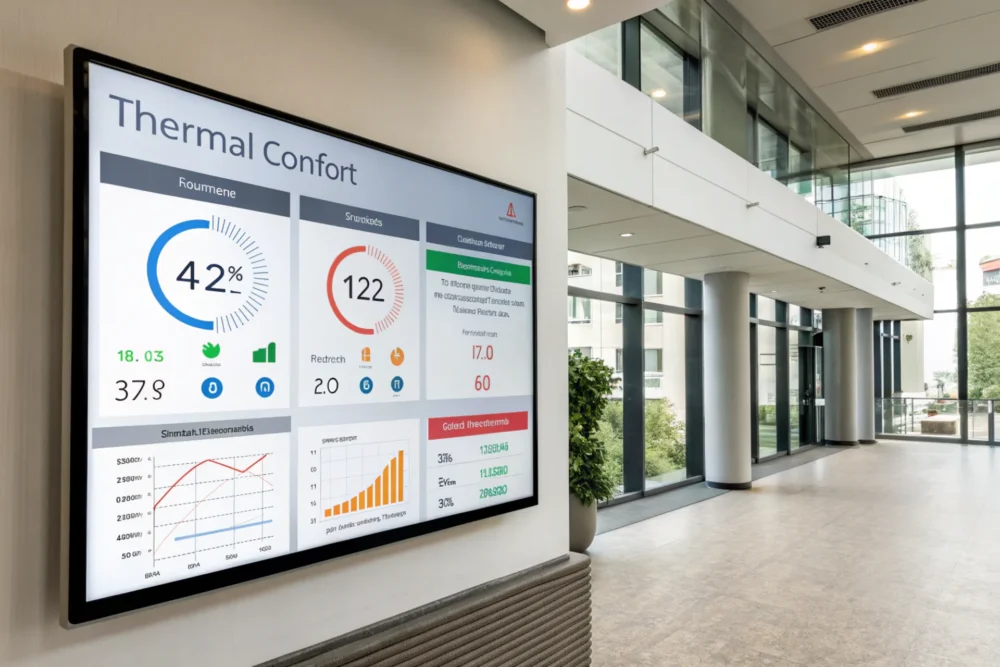
The Complete Comfort Transformation
Indoor comfort involves more than just air temperature – it includes radiant heat exchange, humidity levels, air movement, and personal factors. Our studies show anti-cooling coatings improve multiple comfort dimensions simultaneously:
| Comfort Factor | Improvement Mechanism | Occupant Impact |
|---|---|---|
| Radiant Temperature | Reduced surface temperatures | Eliminates "radiant oven" effect |
| Air Temperature | Stable thermal environment | Prevents overheating near surfaces |
| Humidity Control | Reduced condensation | Prevents mold and mildew growth |
| Air Quality | Lower VOC off-gassing | Reduced material degradation products |
| Consistency | Uniform surface temperatures | Eliminates hot/cold spots |
Workplace Productivity Study
We conducted a blind study in two identical office buildings – one with conventional roofing, one with our anti-cooling coating. The results after 6 months showed:
Productivity Metrics:
- 8.3% increase in task completion speed
- 12.7% reduction in error rates
- 23% fewer comfort complaints
- 15% reduction in sick days during summer months
Employees reported feeling more comfortable, particularly noting the absence of radiant heat from ceilings and walls that typically makes perimeter offices uncomfortable.
Thermal Comfort Engineering
The coatings enhance comfort through several engineering principles:
Mean Radiant Temperature Reduction: By lowering surface temperatures, the coatings reduce radiant heat transfer to occupants, which constitutes approximately 50% of thermal comfort perception.
Thermal Lag Minimization: Traditional buildings experience significant temperature swings as structures absorb and release heat. The coatings minimize this effect, maintaining stable conditions.
Surface Temperature Consistency: Unlike insulation which only slows heat transfer, the coatings prevent heat absorption entirely, creating uniform surface temperatures throughout the building.
These effects combine to create thermal environments that feel consistently comfortable without the drafts, hot spots, and temperature variations that plague conventionally cooled buildings.
Conclusion
Anti-cooling coatings represent the future of sustainable building technology, delivering proven benefits that transform how we manage thermal performance.