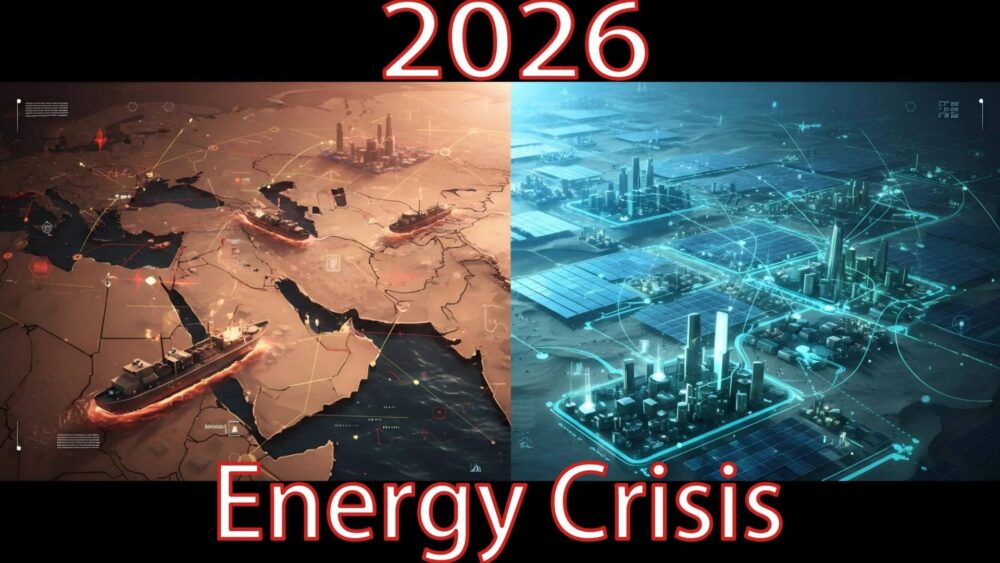
In the spring of 2026, the global energy narrative has deviated from the expected "smooth transition." As tankers in the Strait of Hormuz are diverted due to geopolitical tensions, energy security has once again become a critical global concern. At GD3U, we believe the key to mitigating this "energy anxiety" lies not in deep-sea pipelines, but within the micron-thick technological gains on the surface of photovoltaic (PV) modules.
Q1: Why is enhancing "Self-Cleaning" capabilities more urgent than pushing cell efficiency limits?
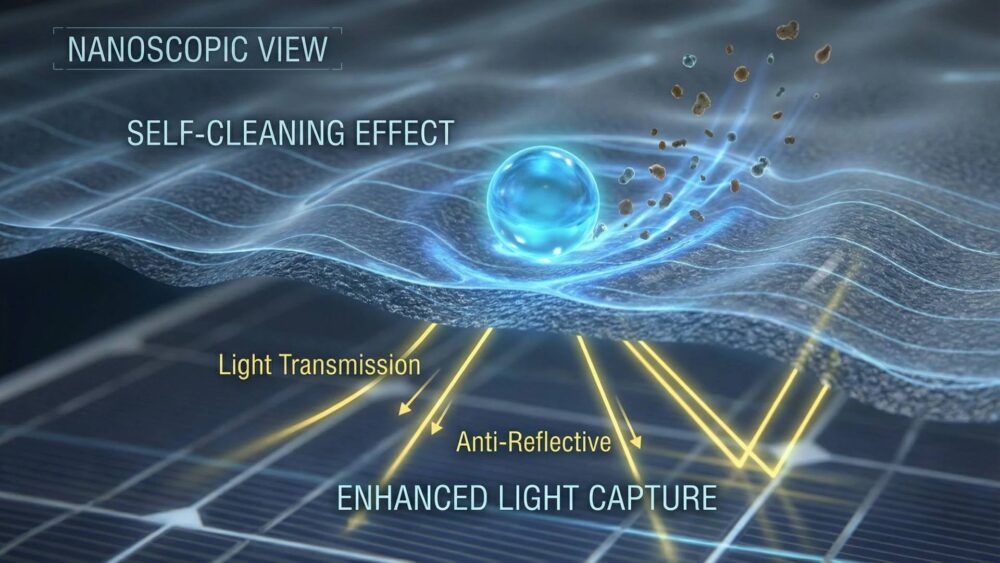
For too long, the industry has been locked in an "efficiency arms race," obsessing over moving solar cell efficiency from 25% to 26%. However, a sharp reality remains: yield loss due to environmental soiling often negates \5%\ to \30%\ of these hard-won efficiency gains. In an era of skyrocketing energy prices, struggling for a 1% physical limit while ignoring 10% shading loss is tactical diligence but strategic failure. By applying "Photovoltaic Self-Cleaning Nano Coatings," plant owners can reclaim power lost to dust and pollutants. This technology grants power plants an "immune system" that utilizes rain and dew for autonomous cleaning, providing a resilient, localized energy gain that is far more reliable than expensive imported fuels.
Q2: What is the long-term ROI of adopting Nano Self-Cleaning Coatings for PV plants?
Self-cleaning coatings are often misclassified as an "optional luxury." From an asset management perspective, they are high-performance tools for combating energy volatility. Below is a 5-year ROI comparison for a 10MW industrial rooftop plant in a moderate soiling environment:
| Dimension | Traditional Manual Cleaning (Quarterly) | GD3U Nano Self-Cleaning Coating | Gain/Difference Analysis |
|---|---|---|---|
| Initial Investment (CAPEX) | Low (Equipment/Tools only) | Higher (Materials & Application) | Coating is a one-time investment |
| 5-Year OPEX | Approx. \$35k – $60k | Approx. $7k – $12k | **>70% reduction in maintenance costs** |
| Energy Yield Gain | Sawtooth fluctuation (Heavy drops) | Sustained high-performance | Average yield increase of 6% – 12%**** |
| Module Health | Risk of micro-cracks from foot traffic | Minimal intervention | Extends physical asset life |
| Cumulative 5-Year Gain | Baseline Revenue | Baseline + $65k – $100k**\** | Significantly shorter payback period |
Q3: How does "Radiative Cooling" technology achieve systemic energy reduction during a crisis?
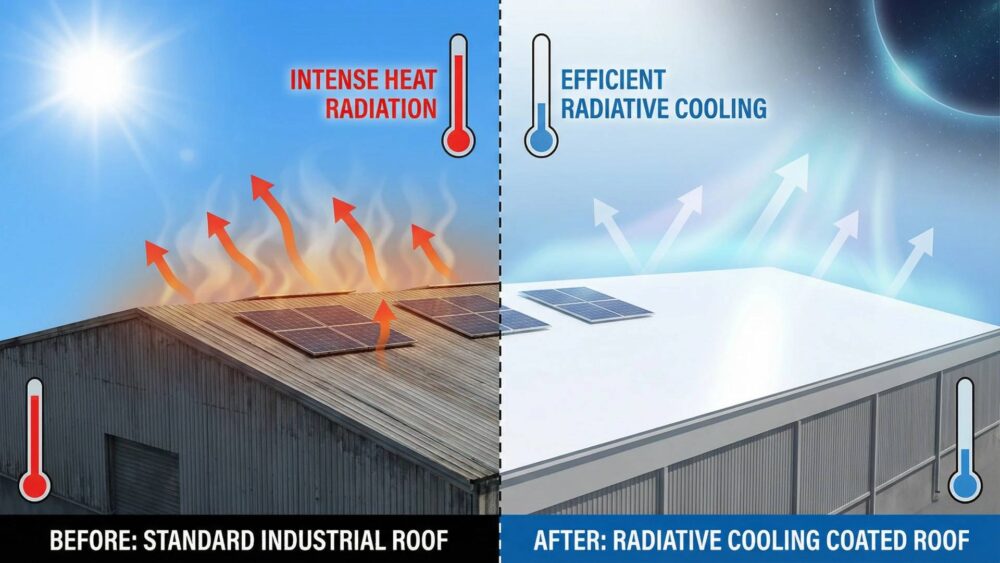
Mitigating energy anxiety requires a two-pronged approach: maximizing production and minimizing consumption. The introduction of Radiative Cooling Technology breaks the vicious cycle of "higher temperatures leading to higher power demand."
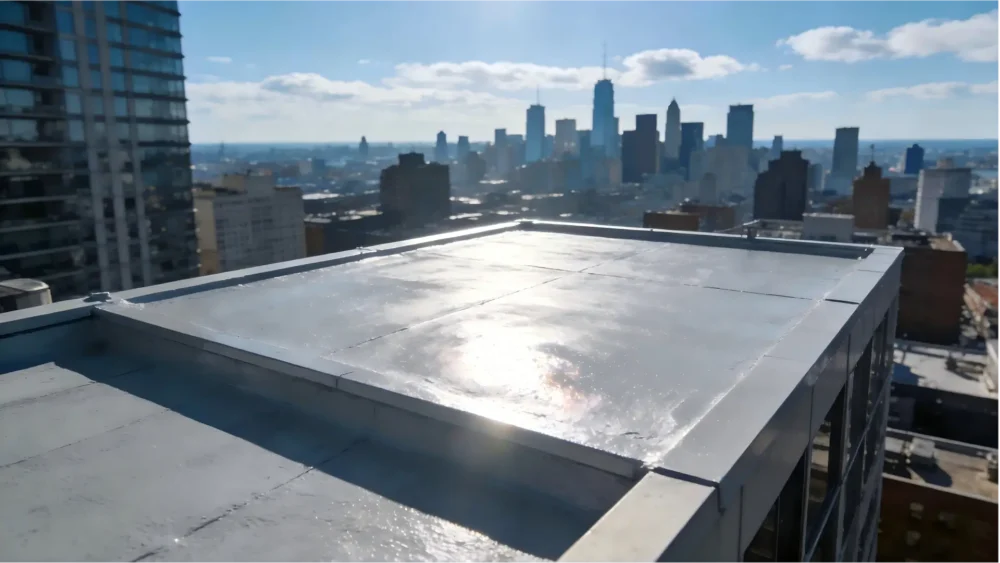
By reflecting over \97%\ of solar heat and emitting internal heat through the "Mid-Infrared Window" into deep space, this technology can reduce rooftop surface temperatures by over \40°C\. This not only slashes building HVAC energy consumption by \20%–40%\ but also provides a "cooling dividend" to the PV system itself: lower ambient temperatures significantly mitigate the thermal degradation of solar cells.
Conclusion: Technology is the Only "Safe Harbor"
True security should not depend on fragile, global supply chains but should be rooted in the ultimate utilization of every photon and the precise control of every watt of heat. From micron-scale self-cleaning coatings to cosmic-scale radiative cooling, GD3U believes this is more than a technical victory—it is the beginning of humanity reclaiming the initiative in the global energy game.