Superhydrophobic Coating works like magic for your car
I see superhydrophobic coating work like magic on my car. Water, dirt, and stains slide off the surface with almost no effort. My car stays cleaner longer, and I spend less time scrubbing and washing. Statistics show that cars with ceramic coatings need 30% fewer full detailing sessions over two years than cars without them. This coating’s self-cleaning effect saves me time and keeps my car looking its best.
Key Takeaways
Superhydrophobic coatings help water, dirt, and stains slide off your car. This keeps your car cleaner for a longer time. You will not need to wash your car as often.
The coating works by making tiny bumps and air pockets. These bumps push away water and dirt. This idea comes from the lotus leaf, which naturally resists water.
You can put on the coating easily with spray kits. You can do it yourself or ask a professional. Both ways protect your car well. Professionals make the coating last longer.
The coating keeps your car safe from rust and UV damage. It also protects against things in the environment. Your car’s paint will look shiny and new for many years.
Pick eco-friendly coatings to help the planet. Follow care tips like washing your car gently. This keeps the coating working well and safe for your car and the earth.
Superhydrophobic Coating Basics
What Is It
When I first heard about superhydrophobic coating, I learned it is a special layer that keeps water away from surfaces. Water drops do not stick to it. They form beads and roll off fast. This happens because the coating holds tiny air pockets. These air pockets stop water from touching the surface much. Scientists call this the Cassie–Baxter state.
Some cool things about superhydrophobic coating are:
Water forms beads and rolls off fast.
Dirt and stains do not stick, so cleaning is easy.
The coating is a thin, clear layer made with nano-sized particles.
If it gets scratched or damaged, it may stop working, so it needs to be strong.
Many coatings use PTFE (Teflon), fluorinated silica, or natural waxes like carnauba wax. New types use safe, eco-friendly ingredients instead of harsh chemicals.
How It Works
I think the science behind superhydrophobic coating is really interesting. The secret is in the roughness and the special chemicals in the coating. When I look at a lotus leaf, I see water roll off without leaving marks. Scientists call this the "lotus effect."
Tip: Rough surfaces and special chemicals together make superhydrophobic coatings work so well.
Researchers found these coatings work best when they have:
A rough surface with tiny bumps.
Chemicals that make the surface energy low.
| Principle | What It Means for My Car |
|---|---|
| Low surface energy | Water and dirt do not stick easily. |
| Nanoscale roughness | The surface stays dry and clean. |
| Hierarchical structure | Big and small bumps help keep water away. |
| Self-healing ability | Some coatings fix themselves after small damage. |
Many coatings use polymers like PDMS or polyurethane to make them strong and last longer. Some can get their water-repelling power back after being heated or put in light. I like that eco-friendly coatings use natural waxes, which are better for the earth.
Benefits for Cars
Water and Dirt Repellency
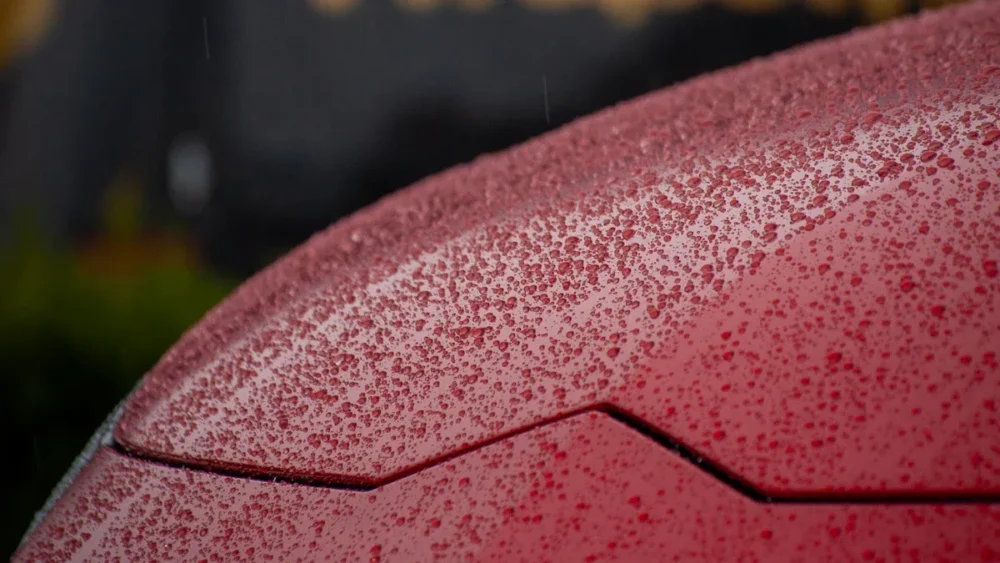
When I drive in the rain, water slides off my car. This happens because of the superhydrophobic coating. Water forms beads and rolls away, carrying dirt with it. My car stays cleaner, even after muddy drives. I do not need to wash it as much. This saves me time and effort.
Here is a table that shows how well this coating works:
| Performance Metric | Quantitative Benefit |
|---|---|
| Water Contact Angle (CA) | 169.05° initial, >155° after 200 cm linear wear |
| Sliding Angle (SA) | 3.7° |
| Weathering Durability | CA > 160° after 500 hours exposure |
| Oil-Water Separation Efficiency | Up to 98.57% for various oils |
| Corrosion Resistance | Impedance > 30,000 Ω |
| Environmental Stability | Maintains effect at 80°C, -18°C, and in salt/ethanol for 500 h |
These numbers show the coating keeps water and dirt away. It works even after a lot of use and bad weather. My car’s surface stays dry and clean. This helps stop stains and water spots.
Self-Cleaning Effect
I like that my car almost cleans itself. When it rains, water rolls off and takes dust and mud away. I see fewer spots and streaks after storms. The self-cleaning effect comes from the coating’s special surface. It has tiny bumps and air pockets that stop water and dirt from sticking.
Superhydrophobic coatings have high water contact angles and low sliding angles. This means water and dirt slide off easily.
After 2500 abrasion cycles and 1000 laundry cycles, the coating still works well.
The special surface structure helps keep the effect strong, even after lots of use.
This means I do not need to scrub hard or use strong cleaners. My car looks shiny with less work.
Tip: The self-cleaning effect also helps stop ice from sticking in winter. It also cuts down glare from sunlight, making driving safer.
Corrosion and Rust Protection
I want my car to last a long time. Superhydrophobic coating helps protect it from rust and corrosion. The coating makes a barrier that keeps water and salt away from metal parts. This is important if you live near the ocean or drive on salted roads in winter.
Market research shows more people use these coatings to stop rust and damage, especially in harsh weather. The coating blocks water and chemicals. My car’s metal stays strong and does not rust easily.
Here is a table that compares the protection:
| Parameter | Superhydrophobic ZnO/Epoxy Coating | Regular Epoxy Coating | Regular ZnO/Epoxy Coating |
|---|---|---|---|
| Corrosion Current Density (Icorr) | 2.08 × 10⁻¹¹ A/cm² | N/A | N/A |
| Corrosion Rate | 3.38 × 10⁻¹¹ mm/year | N/A | N/A |
| Impedance Modulus ( | Z | ) | \~10¹⁰ Ω·cm² |
| Coating Resistance (Rc) | \~10¹⁰ Ω·cm² | \~10⁷ Ω·cm² | \~10⁹ Ω·cm² |
These results show my car gets better rust protection with superhydrophobic coating than with regular coatings.
Paint Longevity
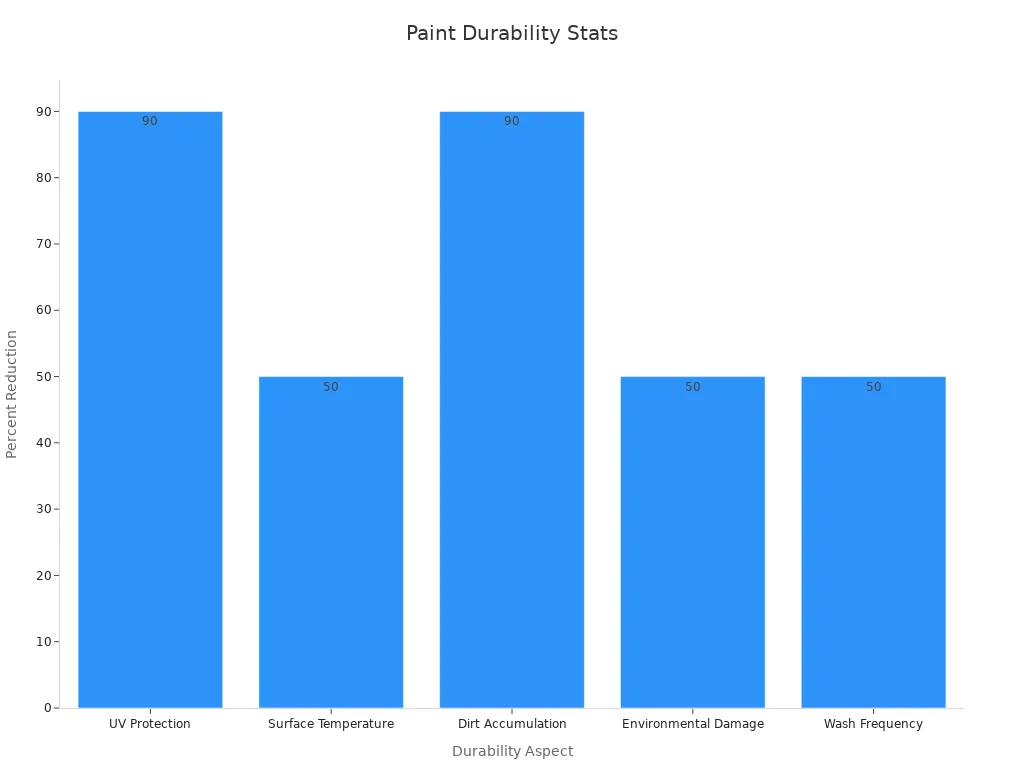
I want my car’s paint to look new for years. Superhydrophobic coating helps with this. It blocks UV rays, dirt, and chemicals that can fade or hurt paint. My car keeps its shine and color longer, even in strong sun or after many washes.
Here is a table that shows how the coating helps:
| Durability Aspect | Statistic / Effect | Impact on Paint Longevity |
|---|---|---|
| UV Protection | Up to 90% reduction in ultraviolet penetration | Reduces oxidation and fading, prolonging paint vitality |
| Surface Temperature | 50% reduction under sunlight | Limits expansion/contraction, reducing chips and cracks |
| Dirt Accumulation | Up to 90% reduction | Keeps paint cleaner longer, reducing wear from contaminants |
| Environmental Damage | About 50% less likely to be damaged by hazards | Protects paint from bird droppings, tree sap, road salts |
| Wash Frequency | Up to 50% reduction | Less frequent washing reduces abrasion and wear |
| Shine and Gloss Durability | Lasts 1 to 5 years depending on product and care | Maintains protective and aesthetic qualities over time |
With the right care, my car can look glossy and new for up to five years. I wash it with gentle soap and do not use rough sponges. This helps the coating last longer and keeps my car’s paint in great shape.
Application and Durability
How to Apply
When I first tried applying a superhydrophobic coating, I followed a simple step-by-step process. Many coatings use spray or water-based solutions, which makes the job easier. Here is a basic guide I use:
Clean the car surface with soap and water. Dry it completely.
Shake the coating bottle well.
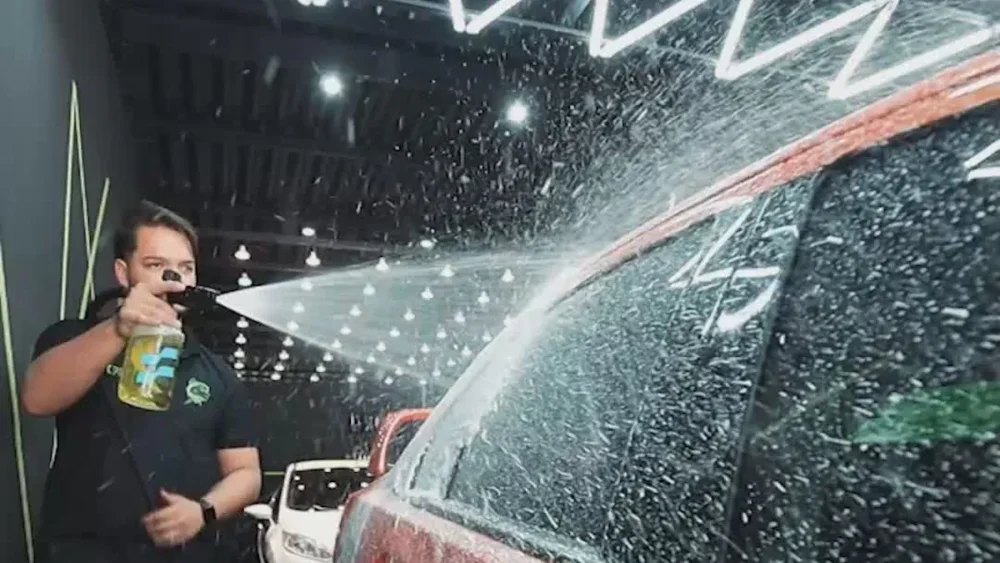
Spray the coating evenly on a small section of the car.
Use a soft cloth to spread the coating in a thin layer.
Let it sit for a few minutes, then buff with a clean microfiber towel.
Repeat for each section until the whole car is covered.
Let the car sit for a few hours so the coating can cure.
Some advanced methods, like sol-gel or chemical vapor deposition, need special tools and chemicals. These methods create strong bonds and last longer, but I find spray coatings work well for most car owners.
DIY vs Professional
I have tried both DIY kits and professional services. DIY kits are easy to use and cost less. I only need basic tools, like spray bottles and towels. Professional applications use advanced equipment and special chemicals. They often last longer and give a smoother finish.
| Aspect | DIY Application | Professional Application |
|---|---|---|
| Cost | Lower | Higher |
| Tools Needed | Basic (spray, towels) | Advanced (spray booths, UV) |
| Durability | Good | Excellent |
| Finish | May have streaks | Very smooth |
| Time Required | 1-2 hours | 2-4 hours |
Professional coatings often use higher SiO2 content, which helps them last longer and resist UV light better. DIY coatings still protect well, but may need reapplication sooner.
Lifespan and Maintenance
I notice that a superhydrophobic coating can last from one year up to ten years, depending on the method and care. Coatings with more SiO2 nanoparticles keep their water-repelling power even after many washes and sunlight exposure. Some coatings can even heal themselves after small scratches, which helps them last longer.
To keep my car protected, I wash it with gentle soap and avoid harsh brushes. If the coating starts to fade, I can reapply it without removing the old layer. New coatings let me do this easily, saving time and energy. I find that regular care and gentle cleaning help the coating last as long as possible.
Tip: Self-healing coatings can recover from small damage, making them a smart choice for long-term protection.
Considerations and Drawbacks
Safety and Compatibility
I always make sure the superhydrophobic coating fits my car’s surfaces. Some coatings stick better to metal. Others work best on plastic or glass. Most coatings can be used on many materials. But some need special steps before applying. Here is a table that shows how coatings work on different surfaces:
| Aspect Tested | Details |
|---|---|
| Substrate Compatibility | Aluminum alloy, ceramics, wood, plastics |
| Mechanical Durability | Retains effect after 25 wear cycles |
| Corrosion Resistance | 99.88% efficiency on aluminum alloy |
| Hydrophobicity Metrics | Contact angle \~163.8°, sliding angle \~2.9° |
| Application Relevance | Good for off-road chassis, suspension, and other car parts |
Even after many rubs, water still rolls off the coating. I always read and follow the instructions for each product. This helps me avoid streaks or weak spots. Some coatings do not last as long on rough or bendy surfaces.
Environmental Impact
I care about nature, so I pick coatings with safe ingredients. Some old coatings use chemicals called fluorocarbons. These can stay in the environment for a long time. They might hurt animals or people. Studies show tiny plastic bits from coatings can get into air or water. These bits could harm us if we breathe them in or swallow them. Some countries now limit or ban certain chemicals in coatings.
Note: Many brands now sell eco-friendly coatings made from natural waxes or safer chemicals. I always check the label for non-toxic choices.
Limitations
Superhydrophobic coatings do not fix every problem. I learned they can wear out if I scrub too hard or drive on rough roads. Some coatings stop working after lots of sun or many freeze-thaw cycles. Here is a table that shows some limits:
| Environmental Condition | Limitation / Observation |
|---|---|
| Mechanical abrasion/friction | Coating can lose effect under strong rubbing or scratching |
| UV/visible light exposure | Some coatings degrade in sunlight |
| Freeze-thaw cycles | Lab tests do not always match real outdoor results |
| Long-term outdoor exposure | Some coatings last over a year, but others crack or fade sooner |
Some coatings are not very clear and may look cloudy.
Not all coatings stop germs in wet places.
Some products cost more or need special tools.
I always test a small spot first and follow care tips. This helps the coating last longer. New self-healing and eco-friendly coatings fix some problems, but I still watch for limits.
I have seen how this coating changes car care. My car stays cleaner, shines longer, and resists rust. Studies show that rough, water-repellent surfaces—like those inspired by lotus leaves—block water and dirt, even after damage. Some coatings even break down pollution under sunlight. I feel confident knowing my car is protected. If you want less work and more shine, give it a try! Have you tried this on your car? Share your thoughts or questions below. 🚗✨
FAQ
How long does a superhydrophobic coating last on my car?
I usually see the coating last from one to five years. The lifespan depends on the product, how I apply it, and how often I wash my car. Some professional coatings last even longer.
Can I apply superhydrophobic coating myself?
Yes, I can use a DIY kit at home. I just follow the instructions and use basic tools like a spray bottle and microfiber towel. I find it easy and quick.
Does the coating make my car slippery or unsafe?
No, the coating only affects the outer surface. My tires and brakes do not get coated. I always avoid spraying these parts to keep my car safe.
Will the coating change the color or shine of my car?
I notice the coating makes my car look shinier. It does not change the color. The clear layer enhances the gloss and keeps the paint looking fresh.
How do I maintain my car after applying the coating?
I wash my car with gentle soap and a soft cloth. I avoid harsh brushes and strong chemicals. This helps the coating last longer and keeps my car looking great.