Foggy Car Windows and Glasses? Here’s a Long-Term Fix.
My kid was singing ‘Let It Go’ in the backseat while I was starring in ‘Fast & Furious: Tokyo Drift – Fog Edition’ up front. Every winter, my windshield turns into a white void. Using my sleeve to wipe it? Just smearing tears across the world.
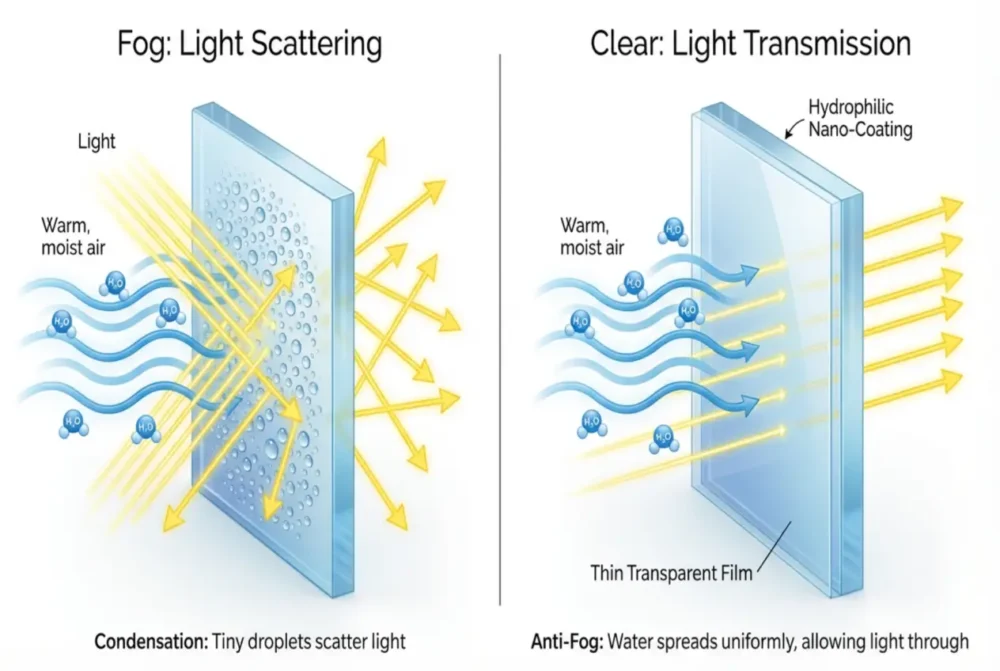
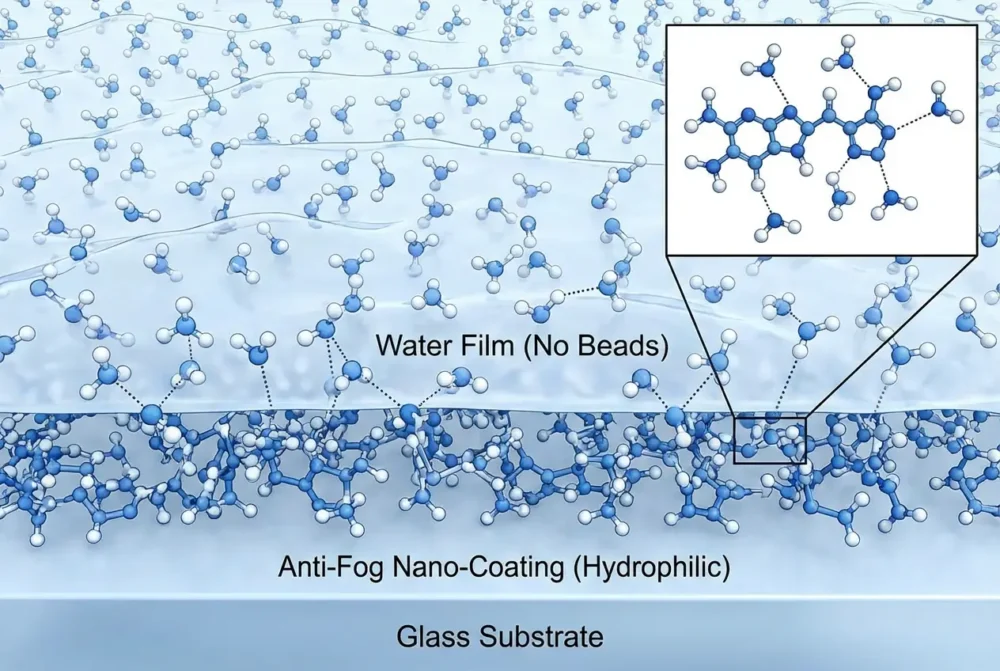
The real fix is a hydrophilic nano-coating applied to the surface. This layer changes water’s surface tension, preventing condensation from beading up into fog. Instead, it spreads into a thin, transparent film. The key to clear vision isn’t wiping water away, but making it invisible.
Stop reaching for that cloth. You’re not fighting water; you’re fighting a mutiny against physics. This guide will help you break up with fog for good.
The Truth About Fog: Is Your Glass Throwing a Rave?
Fog isn’t the weather’s fault; it’s your glass scattering light like a bad DJ. When warm, moist air hits a cold surface, water vapor condenses into billions of nano-sized droplets.
Fog is essentially trillions of ‘micro disco balls’ scattering light in all directions. The result isn’t the road ahead, but a blurry mess—like looking through a frosted glass of milk.
Why Old-School Methods Are All Flawed
Every hack you’ve tried is just a temporary battle against these disco balls, and you always lose.
| Method | Promise | Reality |
|---|---|---|
| Wiping | Quick clear-up | Lasts 5 seconds, leaves streaks and scratches. |
| A/C Blast | Physical dehumidifying | Blasts cold, dry air. Effective but turns your car into an igloo in minutes. |
| Soap/Shampoo | Cheap & easy | Leaves a sticky film that attracts dust and grime. |
| Anti-Fog Sprays | 24-hour protection | The commitment level of a situationship—gone after the second wipe. |
The fatal flaw? These are all reactive fixes. As long as a temperature difference exists, the droplets will return. A true solution must prevent the droplets from forming in the first place.
Nano-Coating: The ‘Invisible Raincoat’ for Glass
The scientific answer is simple: if water beads are the problem, stop them from forming. A hydrophilic nano-coating acts as a peacemaker.
The coating creates a permanent hydrophilic layer. Condensation can’t form into light-scattering beads; it’s forced to lay flat as a uniform film. Light passes straight through, leaving your view crystal clear. Modern coatings can dry in seconds.
Durability is the Real Test
‘Hydrophilic’ is easy; ‘lastingly hydrophilic’ is hard. If it wears off after a few wipes, it’s no better than the sprays.
The technology has leapfrogged old standards. Optimized coatings offer exceptional continuous anti-fog performance and abrasion resistance, significantly outperforming traditional methods. They can withstand thousands of wipes, offering protection that lasts.
Where to Use It: The ‘Windshield & Glasses’ Double Tap
Don’t get distracted by endless applications. For most people, the value lies in two areas: driving safety and daily convenience.
Prioritize your car’s windshield, driver’s side window, and your everyday glasses. These are the core pain points where fog impacts safety and quality of life most directly.

Forget medical endoscopes and supermarket freezer doors for now. Just know it works on any glass or smooth plastic. But focus your resources on the main problems first.
DIY Application: A 5-Minute Job with a 5-Day Redo Risk
They say it’s ‘easy,’ but won’t mention the failure rate. The process is simple, but the prep is everything.
The correct process is straightforward:
-
Clean the surface thoroughly and keep it dry. This is the most critical step. Use clean water and a cloth to remove all dust and grime. Ensure it’s completely dry. Do NOT use alcohol or chemical cleaners, as residues can prevent proper adhesion.
-
Wipe evenly with a paper towel or soft non-woven cloth. Apply the coating solution to the cloth and spread it in a thin, even, circular layer across the surface. It dries almost instantly.
The application takes minutes. But if you mess up the cleaning and leave contaminants, the coating will fail. Getting it right the first time is far easier than fixing a mistake.
Conclusion
Next time your windows fog up, you have two choices:
A. Keep using your sleeve to wipe tears away, praying in a blurry, dangerous haze.
B. Let the nano-coating handle the physics, leaving your glass clear and indifferent—like your ex’s heart.
Your move.