During summer, energy bills can get very high. You may worry when you see your bill each month. You want your home or business to stay cool. But the air conditioning runs all the time. Cooling coating is a smart way to help. It reflects sunlight away from your building. This keeps your building cooler. It also means you do not need to use the AC as much. Look at how much energy cooling uses:
| HVAC Component | Percentage of Total Energy Use in Commercial Buildings |
|---|---|
| Total HVAC | About 40% |
| Cooling Systems | Up to 15% |
With cooling coating, you can save money and stay comfortable.
Key Takeaways
- Cooling coatings bounce sunlight away and stop heat from getting in. This keeps buildings cooler and means you use less air conditioning. These coatings can make roofs up to 40°F cooler. They also make rooms inside cooler by a few degrees. This helps people feel more comfortable. Using cooling coatings saves energy. It can cut cooling costs by up to 30%. It also helps your building last longer by stopping damage. Cooling coatings work best on sunny places like roofs and walls. They can lower energy bills fast, especially where it is hot. Buying cooling coatings saves money over time. You can get your money back in less than 12 years. The benefits can last for 20 years or even longer.
How Cooling Coating Works
Reflecting Sunlight
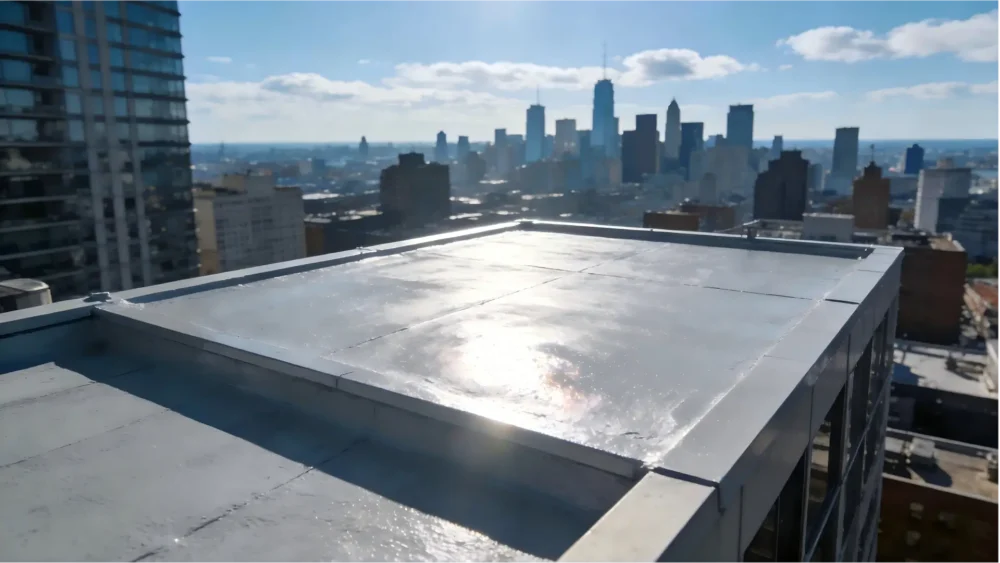
A cooling coating works like a white shirt on a hot day. A white shirt bounces sunlight away, so you feel less hot. Cooling coating uses special stuff to reflect sunlight and solar radiation from your building. This stops your roof or walls from getting too hot.
The science is about radiation heat transfer. Every surface can bounce, take in, or give off energy from the sun. When you put on a cooling coating, it makes the surface reflect more and soak up less heat. Your building stays cooler, so you use less energy for air conditioning. Some coatings can bounce back up to 90% of sunlight. This is much better than regular roofing materials. Even dark coatings now use new pigments to reflect near-infrared light, which is a big part of the sun’s heat.
Tip: The color and material of the coating are important. Lighter colors and special pigments bounce more sunlight and help keep your building cool.
Lowering Surface Temperatures
Cooling coatings do more than just bounce sunlight. They also help your building send heat back into the air. This is called passive radiative cooling. The coating gives off heat in the mid-infrared range. This helps make your roof or walls cooler, even when it is very hot outside.
Researchers found these coatings can make roofs up to 40°F (about 22°C) cooler than roofs without them. Inside air can get up to 2.9°C cooler, so your space feels better. In real tests, buildings with passive radiative cooling coatings used up to 40% less energy for cooling.
| Aspect | How Cooling Coating Helps |
|---|---|
| Reflects Sunlight | Reduces heat absorption by up to 90% |
| Emits Heat | Releases absorbed heat into the sky |
| Lowers Temperatures | Roofs can be up to 40°F cooler |
You can see that a cooling coating keeps your building cooler and helps you save money on energy. This works best on surfaces that get lots of sun, like roofs and outside walls.
Cooling Coating Benefits
Energy Savings
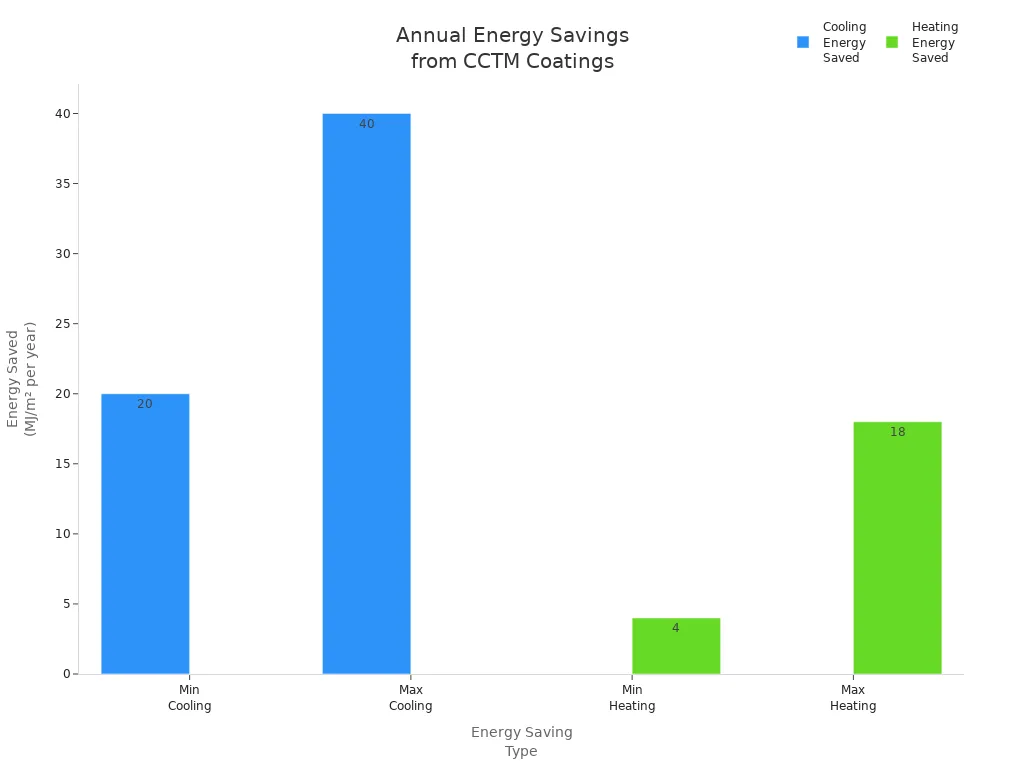
When you use a cooling coating, you can save energy. These coatings reflect sunlight and make your roof or walls cooler by 10–20°F or more. When your building is cooler, your air conditioning does not work as hard. This means you use less electricity and pay less for energy.
Field studies show that heat-reflective paint can cut cooling energy use by 20–30%. Sometimes, indoor surfaces get 10–15°C cooler. This big drop means your HVAC system works less and uses less power. For example, a commercial building with cool roof coatings saw roof temperatures drop by 50°F. The cooling part of their HVAC use went down by almost half. In hot schools, special coatings helped lower yearly energy costs by 18%.
Note: Making your building’s surfaces cooler saves energy every day, especially when it is hot outside.
Comfort Improvement
A cooler building feels better to live or work in. When you put on a cooling coating, indoor temperatures stay steady and nice. You do not need the air conditioning as much. You also avoid hot spots near windows or under the roof.
Studies from different places show cooling coatings can lower indoor temperatures by 2–7°C. For example, in Mexico, solar control films made rooms about 4°C cooler. In Lisbon, high-reflective coatings dropped indoor heat by up to 6.9°C in the heating season and 2.3°C in the cooling season. These changes help you feel more comfortable inside.
| Study / Location | Method | Cooling Coating Type | Indoor Temperature Reduction | Notes |
|---|---|---|---|---|
| Xamán et al. (Mexico) | Numerical simulation | Solar Control Films (SCFs) | \~4°C (33°C to 29°C) | Good cooling during sunny times; double-glazed windows |
| Teixeira et al. (Lisbon) | Experimental | High reflective SCFs (exterior) | Up to 6.9°C (heating season), 2.3°C (cooling season) | Best cooling when SCFs are outside |
| Sedaghat et al. (Kuwait) | Experimental | SCFs | 2–5°C | Insulation slowed heat loss at night |
| Moretti et al. (Moderate climate) | Full-scale experiment | SCFs | 2–3°C | Noted on sunny spring days; also affected thermometer temperature |
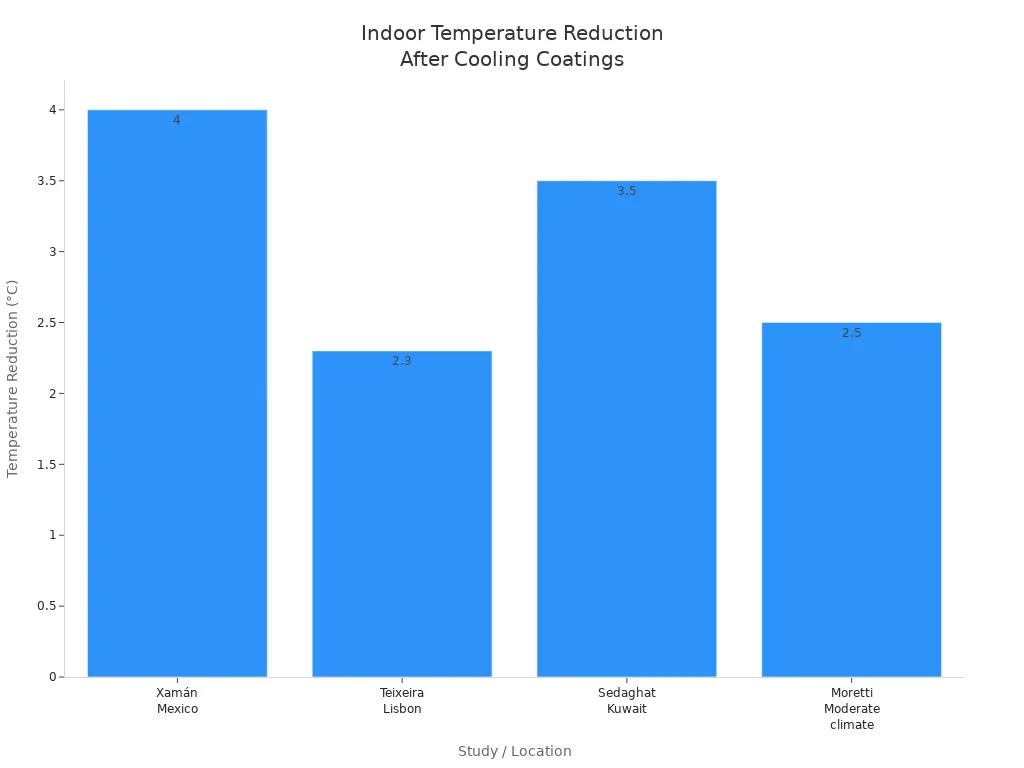
You will notice the difference most on hot, sunny days. The air inside feels cooler, and you stay comfortable without using the AC as much.
Durability and Longevity
Cooling coatings do more than save energy and make you comfortable. They also protect your building and last longer than regular paint. Good reflective coatings can last 10 to 20 years. Regular paints may only last 3 to 7 years. These coatings resist UV rays, moisture, and temperature changes. Your roof or walls do not crack or fade as fast.
- Acrylic coatings reflect sunlight and protect roofs from UV and moisture.
- Silicone membranes keep water out and stop cracks from forming.
- Reflective coatings make roofs cooler, so they last longer and need fewer repairs.
- These coatings form a strong barrier that keeps out leaks and moisture.
You spend less on repairs because the coating protects your building from bad weather. Some coatings can help your roof last 10–20 years longer. This means you do not have to replace it as often.
Tip: Using a cooling coating helps your building last longer and cuts down on waste from old roofing.
Cooling coatings also help the environment. They lower greenhouse gas emissions by using less energy. In cities, these coatings reflect sunlight and keep surfaces cooler. This helps fight the urban heat island effect. It makes neighborhoods nicer and lowers stress on power grids during heat waves.
Real-World Results
Homeowner Stories
You can really notice a change with cooling coatings on homes. In hot places, many families have trouble with heat inside. After putting cooling coating on their roofs, some people felt cooler rooms right away. One family in a mobile home said their space stayed nice even on the hottest days. They did not use the air conditioner as much and their electric bill went down by almost 30%. Another person in a sunny city said the inside got cooler by a few degrees after using cooling coating. Their kids slept better at night. The family spent more time together and felt comfortable. These stories show you can have a cooler house and save money too.
Commercial Savings
Cooling coatings help businesses as well. If you own a business building, energy bills can be a big cost. Many owners pick cooling coatings to pay less for energy. Roofing experts say these coatings bounce sunlight and stop heat from getting in. This means your air conditioning does not work as hard. You pay less for energy and repairs. In Hong Kong, a test showed a radiative cooling coating on a concrete roof made the roof over 21°C cooler. Inside, it was about 2.8°C cooler. This cut electricity for cooling by 20%, saving about 8 kWh each day. In some Chinese cities, buildings with these coatings saved almost half on cooling energy each year. These savings help your business grow.
You can see bigger results in some cities:
| City/Initiative | Main Result | Extra Benefit |
|---|---|---|
| Phoenix, Arizona | 14% less cooling energy demand | Lower peak cooling demand by 11–27% |
| Portland, Oregon | Cool roofs cost less than green roofs | Less maintenance needed |
| California (statewide) | Cool roofs required by building standards | Policy supports energy savings |
Tip: Using a cooling coating helps your community stay cooler and use less energy.
Cost and Savings
Upfront Investment
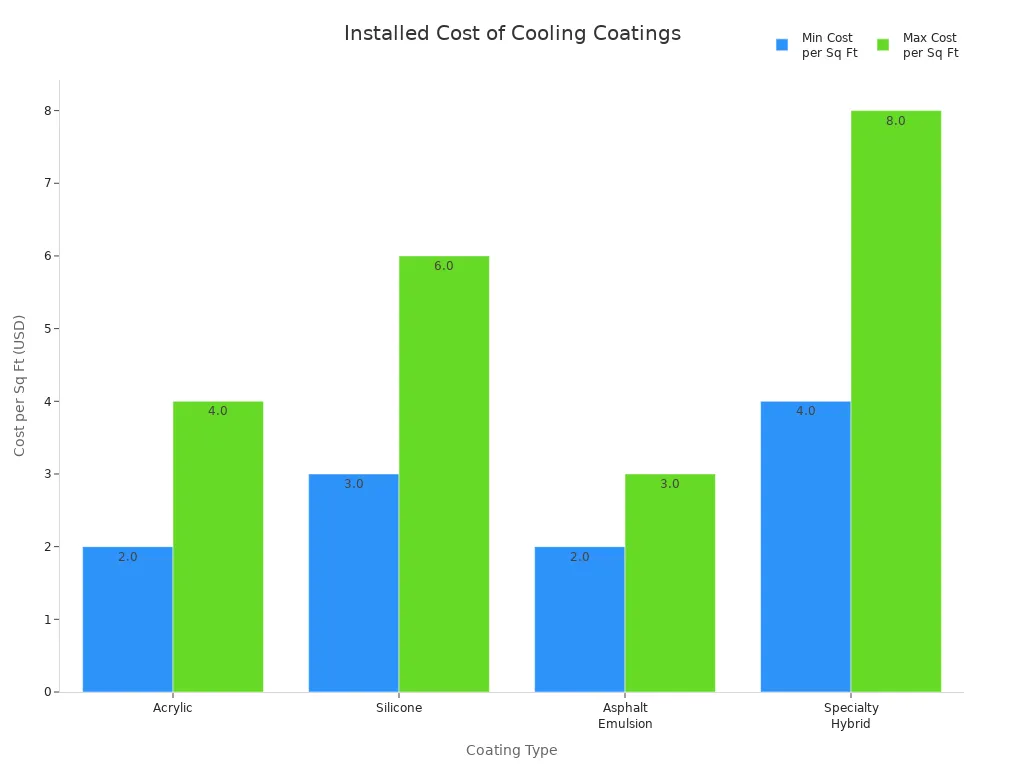
When you look at installing a cooling coating, you want to know the cost. The price depends on the type of coating and your building’s needs. Here is a table that shows the average installed cost per square foot for different types:
| Coating Type | Average Installed Cost per Square Foot (USD) | Notes on Application and Features |
|---|---|---|
| Acrylic | $2.00 – $4.00 | Budget-friendly, suitable for roofs with good drainage |
| Silicone | $3.00 – $6.00 | Handles ponding water well, good for drainage issues |
| Asphalt Emulsion | $2.00 – $3.00 | Heavy-duty, ideal for built-up roofs |
| Specialty Hybrid | $4.00 – $8.00 | Advanced features like instant-set and crack-bridging |
| Premium Warranties | Additional $0.50 – $1.50 | Optional, adds long-term coverage |
You may pay more for premium coatings, but these often last longer and need less maintenance. Always check if your roof type matches the coating you choose.
Payback Period
You want to know how fast you will get your money back. Most people see savings on their energy bills right away. The payback period can range from about 8.5 to 11.8 years for most homes. Some studies show that the payback can be as short as 5.3 years or as long as 24 years. This depends on your local climate, energy prices, and how much you use your air conditioning.
- Some homes cut heating and cooling costs by 45% and paid back the investment in 8.5 years.
- Others saw a 49% reduction and paid back in 9.2 years.
- In some cases, a 30% reduction led to a payback in 11.8 years.
Tip: Hotter climates and higher energy costs usually mean a faster payback.
Long-Term Value
A cooling coating gives you more than just energy savings. Over 10 to 20 years, you can see a strong return on investment. Cool roofs often lower cooling energy use by 10-20% in homes. In hot places, the savings can be even higher. Some coatings last up to 25 years, so you save money for a long time.
- You spend less on air conditioning and roof repairs.
- Your roof lasts longer because the coating protects it from sun and rain.
- Energy-efficient roofs attract buyers who care about the environment.
- In hot regions, these coatings can help your property sell faster and for a better price.
Note: Always check that your coating meets standards like ENERGY STAR. This helps you get the best performance and value.
You can lower your energy bills and enjoy a cooler space by making smart choices. Cooling coatings help you save money, feel more comfortable, and protect your building for years. Many people see real results after using these solutions. If you want to learn more, reach out to a local expert or start your own research. Take the first step toward a cooler, more efficient home or business.
FAQ
How long does a cooling coating last?
Most cooling coatings last 10 to 20 years. You can make them last longer by cleaning your roof and checking for damage each year. Good care helps you get the best results.
Can you apply cooling coatings to any roof?
You can use cooling coatings on many roof types, like metal, asphalt, or concrete. Some roofs may need repairs first. Always check with a professional before you start.
Will a cooling coating change the look of my building?
You can choose from many colors and finishes. Most coatings look like regular paint. Some even make your roof look brighter and cleaner.
Do cooling coatings need special care?
You should inspect your coated roof once a year. Clean off dirt and leaves. Fix any cracks or damage quickly. This keeps your coating working well.